Welcome to the May 2026 release notes. Our product team is committed to continuously improving the platform, from small refinements to major feature upgrades. In this update, we highlight the new features and enhancements delivered this month and how they’re designed to bring even more value to your operations.
1. Route Self-Assignment for Drivers
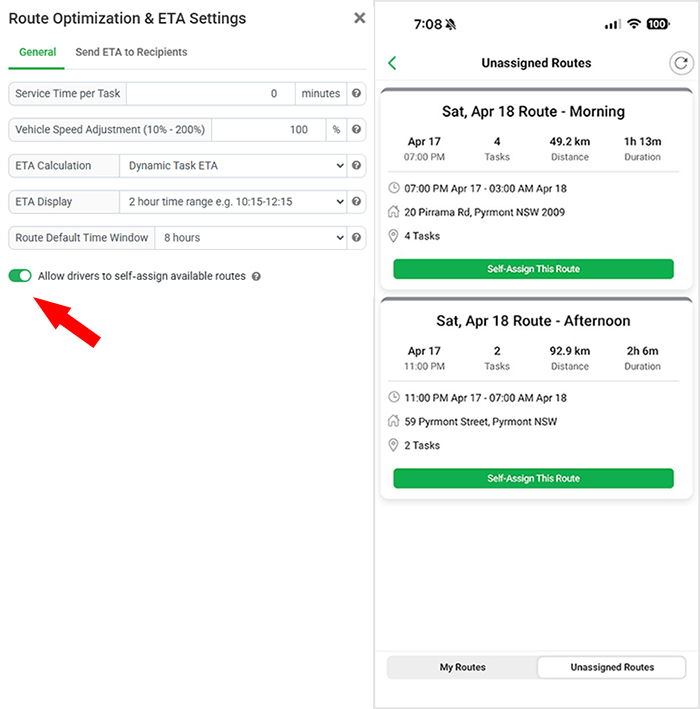
We’ve introduced a new Route Self-Assignment feature within the Multi-Route Planner module, allowing drivers to self-assign entire routes directly from the driver app. Previously, drivers could only self-assign individual tasks, which was less efficient when they needed to claim and manage a larger group of related tasks. This new feature streamlines the workflow by enabling drivers to take ownership of a complete route in a single action.
Dispatchers can now create multiple routes, add tasks to each route, and leave selected routes unassigned for drivers to claim. Drivers can browse the list of available unassigned routes in the driver app and self-assign the routes they wish to work on. This provides greater operational flexibility, supports dynamic workforce management, and reduces the need for manual dispatcher assignment during busy periods.
2. User Permission and Data Access Enhancements
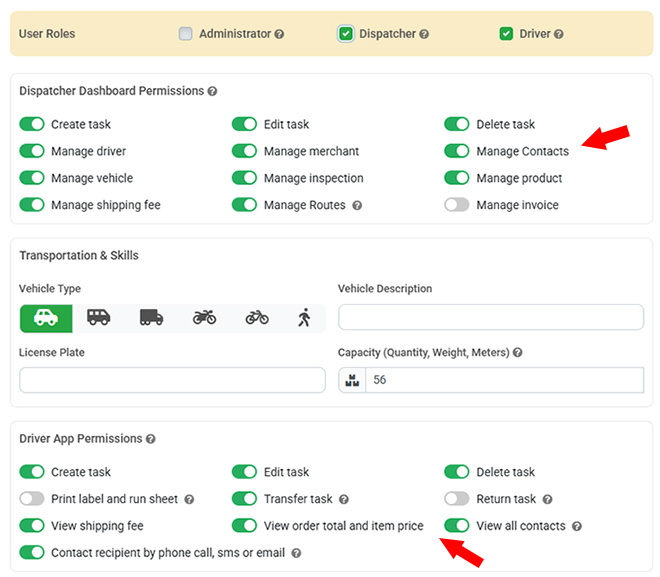
We’ve introduced additional user permission controls to provide greater security and flexibility when managing access to sensitive business data. You can now separately control whether dispatchers and drivers are allowed to access your Contact List, which contains customer information and saved contact records. Previously, users with task creation access could browse and search the contact list when creating tasks. With this enhancement, administrators can now restrict access to improve data privacy and better control how customer information is viewed within the platform.
In addition, new permission settings have been added for the driver app. Administrators can now decide whether drivers are allowed to view the product or package details and the order total amount associated with delivery tasks. These new controls help businesses protect sensitive order information while still allowing drivers to access only the details required to complete deliveries efficiently.
3. Linked Tasks from Spreadsheet Upload
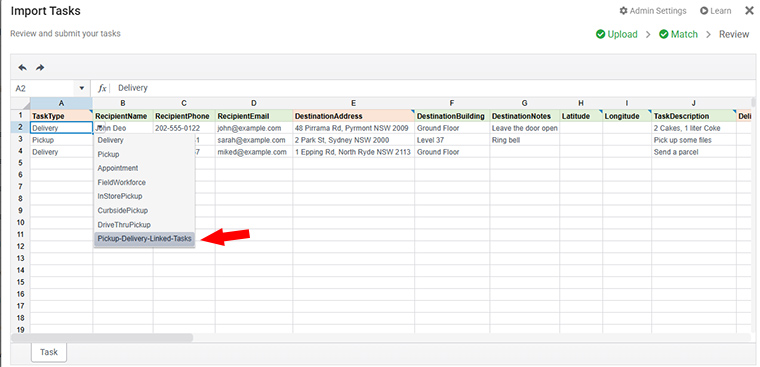
We’ve enhanced the Spreadsheet Bulk Task Upload feature to support the creation of linked pickup and delivery tasks directly from a single spreadsheet row. Previously, users needed to create pickup and delivery tasks separately in multiple rows or manually link them after import. With this new enhancement, the upload process is now much faster and easier for businesses managing pickup and drop-off workflows.
To use this feature, simply select “Pickup-Delivery-Linked-Tasks” in the TaskType column of your spreadsheet and provide both the dispatch location and drop-off destination in the same row. The system will automatically recognize the entry as a linked pickup and delivery job, create the two connected tasks, and generate the required External Job ID automatically. This reduces manual work, improves upload efficiency, and simplifies the management of linked delivery operations.
4. Shopify App Enhancements for Order Lines
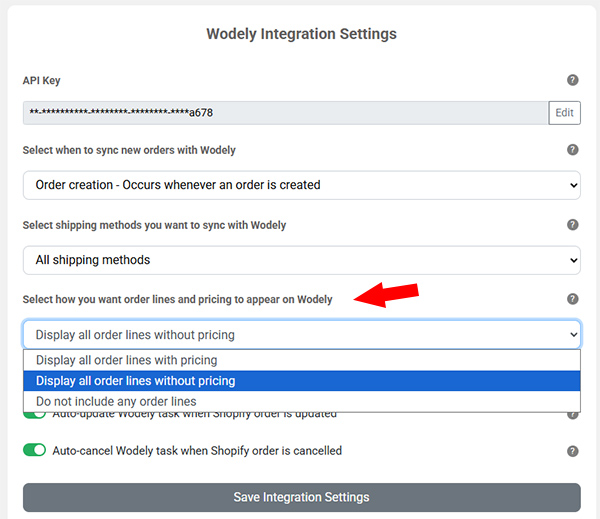
We’ve enhanced our Shopify App to give merchants more control over how order line items and pricing information are synced to the platform. Previously, when Shopify orders were imported, all order details, including product line items, pricing, and order totals — were automatically included. While this information can be useful for fulfillment, some businesses prefer not to expose sensitive pricing or product details to couriers and drivers.
With this new update, merchants can now configure how order information is displayed and synchronized. Available options include displaying all order lines with pricing, displaying order lines without pricing details, or excluding all order line items entirely from the synced task data. These new controls help businesses protect sensitive customer and pricing information while still maintaining an efficient delivery workflow.